
Articles
Meet the Green Eco Warriors

Green Eco Warriors work with others who care about the environment. They use education and motivation to fight for our planet’s survival. The original Warriors were fifth and sixth grade boys and their families. They began by watching documentaries about humankind’s impact on the planet. Then they started the Green Eco Warrior recycling program in their schools. Eventually the boys were featured on several news shows. Anyone can be a Green Eco Warrior! The ways to take action are endless. Jonathon (left photo) helped to pass the Connecticut bottle...
read moreDefeating the Phantom Draw

The Phantom Draw lives in appliances that are still running after you have switched them off (this is called standby mode). You will know the phantom is still drawing power by a small green, blue, or red light on your appliance. The phantom draw is a major electricity waster and adds to air and water pollution. You can beat the Phantom Draw by using a power strip or unplugging appliances. Unplugging appliances, games, cellphone chargers, and televisions, or using a power strip that can be switched off completely will stop the Phantom in his tracks and lower your electric usage. Vocabulary Energy– is the ability to do work. Energy can be found in a number of different forms. It can be chemical energy, electrical energy, heat (thermal energy), light (radiant energy), mechanical energy, and nuclear energy Appliance – devices such as refrigerators, stoves, microwaves, and computers, designed to perform a specific task. Electricity– the supply of electric current to a house or other building for heating,lighting, or powering appliances. Electricity is most often generated by the combustion (burning) of hydrocarbons (oil, coal, gas) or other substances that release substantial amounts of carbon dioxide, causing global warming, and other pollutants such as sulphur dioxide, which produces acid rain. Kilowatt- a measure of 1,000 watts of electrical power,...
read moreOur Planet, Our Future
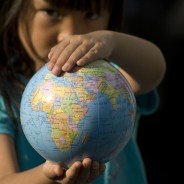
Becoming an Green Eco Warrior is easy. Start by learning about what the Green Eco Warriors are doing in your community. Then join the crusade to save our home, our planet. You can be a part of changing the world for the health and safety of us all. Making small changes at home leads to big changes in how we care for our planet. Learn more about how you can get involved. Read about climate change, global warming, and pollution’s effect on our drinking water, rivers, streams, oceans, land, plants, animals, and the health of the human race. You can learn by reading the information provided on these educational websites. Or if you don’t like to read, then watch a film! Here are some films that inspired us to get started on our crusade to teach others about the harms of trash and pollution: “Hawaii Messages in the Waves” by BBC. “The Story of Stuff” by Anne Leonard “Kilowatt Ours” by Jeff Barrie Watch a movie with your family. Make it a family night. Add popcorn to your educational movie, and...
read moreHow Much Waste Does Your School Create?

In one school year, Windsor Connecticut’s public schools throw out roughly half a million non-recyclable styrafoam lunch trays. If stacked one on top of another these trays would be taller than four of the worlds largest structures COMBINED! How did we figure this out? Peter Faulk of the Windsor Green Committee helped us with some research and provided the image of the trays stacked next to 4 of the world’s largest structures. Take a look at the research and math below used to calculate the amount of trays used in Windsor’s public school’s lunch rooms daily, and yearly . An estimated 5 tons of Non Recyclable Lunch Trays used and discarded yearly in Windsor, CT...
read morePlastic Ocean
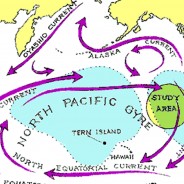
Article by Leticia Colon de Mejias Photo Algalita Marine Research “The Great Pacific Garbage Patch”, features three million tons of plastic debris floating in a swirling mass of trash that has grown to be larger than the state of Texas. Humans toss another 2.5 million pieces of plastic into our oceans hourly. The United Nations Environmental Program reports an estimated 46,000 pieces of plastic debris floats on or near the surface of every square mile of ocean. Plastic, Fish and Plankton In parts of our oceans, there is more plastic than plankton. Over time with consistent exposure to the sun and water, the plastic breaks down from big pieces into lots of little pieces. Fish, birds, and sea life mistake the plastic for food and ingest the small pieces of plastic. For billions of years it was safe for fish and animals to eat objects floating in the water, this is because anything in the ocean was organic matter. Today sea animals are dying because they are eating plastic instead of organic matter. Although we don’t often think about plankton, these little guys play a big role in the planet’s eco-system. They are food for many animals such as fish and whales. In areas of the ocean where there are large amounts of plastic, the amount of plankton has decrease to alarming levels. It is important to understand that the plankton in our oceans removes 50% of the carbon dioxide in the planet’s atmosphere, and creates 50% of the oxygen...
read moreGreen Eco Warriors Recycling Activity

Become a part of changing your world. Make small changes in how you care for your planet. Learn more about how you can get involved. Read about climate change, global warming, and pollution’s effect on our drinking water, rivers, streams, and oceans. Why Recycle? By recycling, you will be protecting the environment, protecting your health and the health of the people you love. Fast Facts on Recycling: Reduces the amount of waste that must be disposed – which means less waste to incinerate (burn) which creates air pollution and greenhouse gases, or dumped in a landfill which can lead to groundwater pollution. Conserves water and precious natural resources – since less natural resources need to be extracted from the earth and processed. Saves energy – In 2003, EPA reported the energy savings from recycling in the US accounted for roughly 1,486 trillion Btu in energy savings – an amount equivalent to the consumption of 11.9 billion gallons of gasoline or 256 million barrels of crude oil. By using less natural resources and using less energy we reduce greenhouse gas emissions. How to start recycling Recycling is easy and important! Learn what to recycle in your area by reviewing the list of recyclable items. Think about it, could the items you are throwing in the trash be recycled? Collect the items that are recyclable inside a paper bag or recycling bin .You can leave the items curbside with your trash for pick up on trash day. If your city or town...
read moreSuccess Story: Jonathan Mejias
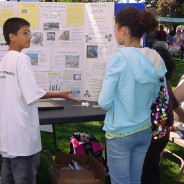
The Green Eco Warriors PDF file version of Jonathon’s presentation highlights the motivation for a lunch room recycling program that Jonathon Mejias started at his middle school. The Lunch room recycling program was the first step in our journey to becoming “Green Eco Warriors.” We have continued to learn and grow. We created Public Access Programming for WIN-TV called “Green Eco Warriors” (see videos link). The programs are intended to educate others about what they can do to get involved and make a difference. My family and I built this website to provide Motivation and Educational links to other sources we found helpful on our journey. We want to navigate people to current and factual information about what we can do to help our planet ~ our home. The more we learned, the more we realized that we needed to keep searching for facts. We stay true to our Mission “Educate and Motivate”. We believe it is youth that will heal the planet and save our future. Knowledge is power, so share what you learn. Together we can Make a difference! This our call to action…Green Eco Warriors unite! Facts we found during our research about Trash and where it goes after we bring it to the curb. Right now our oceans are full of plastics and trash. Only three to five percent of all plastics are recycled. Think about this: All plastic ever created still exists today! Except for the small amount incinerated. Learn the facts: Many people do not even know...
read moreKilowatt Ours
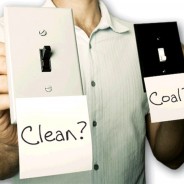
“What if, every time we flipped a light switch at home, a mountain exploded in West Virginia; or every time we turned on the air conditioner in summer, a child suffered an asthma attack; or when we turned up the heat, the entire planet was warming… and what if, instead of all that, we had a choice of something better? What choice would you make?” “I’ve heard it said that when you do things the way you always have, you’ll get what you’ve always gotten. Today we’ve got global warming, air pollution, and all sorts of human health problems that are tied to the way we generate electricity… how can we possibly afford to build all these new power plants? There’s got to be a better way.” Jeff Barrie, Creator of Kilowatt...
read moreThe U.S. Energy Information Administration Has a Kids Page

Want to learn about energy in a fun way? Join the energy ant to learn about energy facts, fun & games, energy history, and classroom activities (K-12.)...
read moreWhy We Love Algalita
Algalita is dedicated to the protection of the marine environment and its watersheds through research, education, and restoration. During the school year, Algalita educators present comprehensive environmental education programs with activities that include formal classroom curricula, as well as exciting and innovative hands-on and web-based programs. Currently, they reach almost 5,000 students worldwide through their science-based education programs. To learn more...
read more
